Three things make a podcast sound expensive, and none of them is the microphone: a room that is not bouncing, a level set individually per voice, and every voice recorded to its own track. Get those three and a modest setup sounds professional. Miss them and the best microphone in the world sounds like a conference call.
Here is what to check before you book anywhere in Toronto.
1. Is every voice on its own track?
This is the question. Ask it first.
One merged file means every voice is welded together. Your guest's chair creaks over your best line — that line is gone. One person is quieter than the other for the whole episode — you cannot fix one without moving the other.
Separate tracks mean each microphone is captured independently. You can level one person, cut a cough, remove a phone buzz or edit one speaker's pause without touching anyone else. It is the difference between fixing a problem and losing the take.
Every mic here records to its own track through an SSL 2+ or an Audient EVO 16 into Pro Tools. If a studio cannot tell you clearly that it does this, that is your answer about the studio.
2. Is the room treated?
A boardroom with a USB mic on the table is the most common podcast setup in the city, and it is why so many shows sound like they were recorded in a stairwell.
Hard parallel surfaces — drywall, a glass table, a window — bounce every voice back into the microphone milliseconds later. It gets printed into the recording and it cannot be removed afterwards, because the reflections are in the same file as the speech. That echoey, slightly distant quality listeners describe as "cheap" is almost always this and not the mic.
The room here is acoustically treated. That is most of what separates a podcast that sounds professional from one that sounds like a phone call.
3. Is a level set per voice?
A loud host and a quiet guest do not get the same gain. Obvious, and routinely skipped.
Set one gain for the table and you get one person clipping while the other is buried in noise — and by the time you notice, the episode is recorded. Here levels are set per voice before the conversation starts, and an engineer watches them while you talk, which is the whole point of not doing this yourself.
The setup
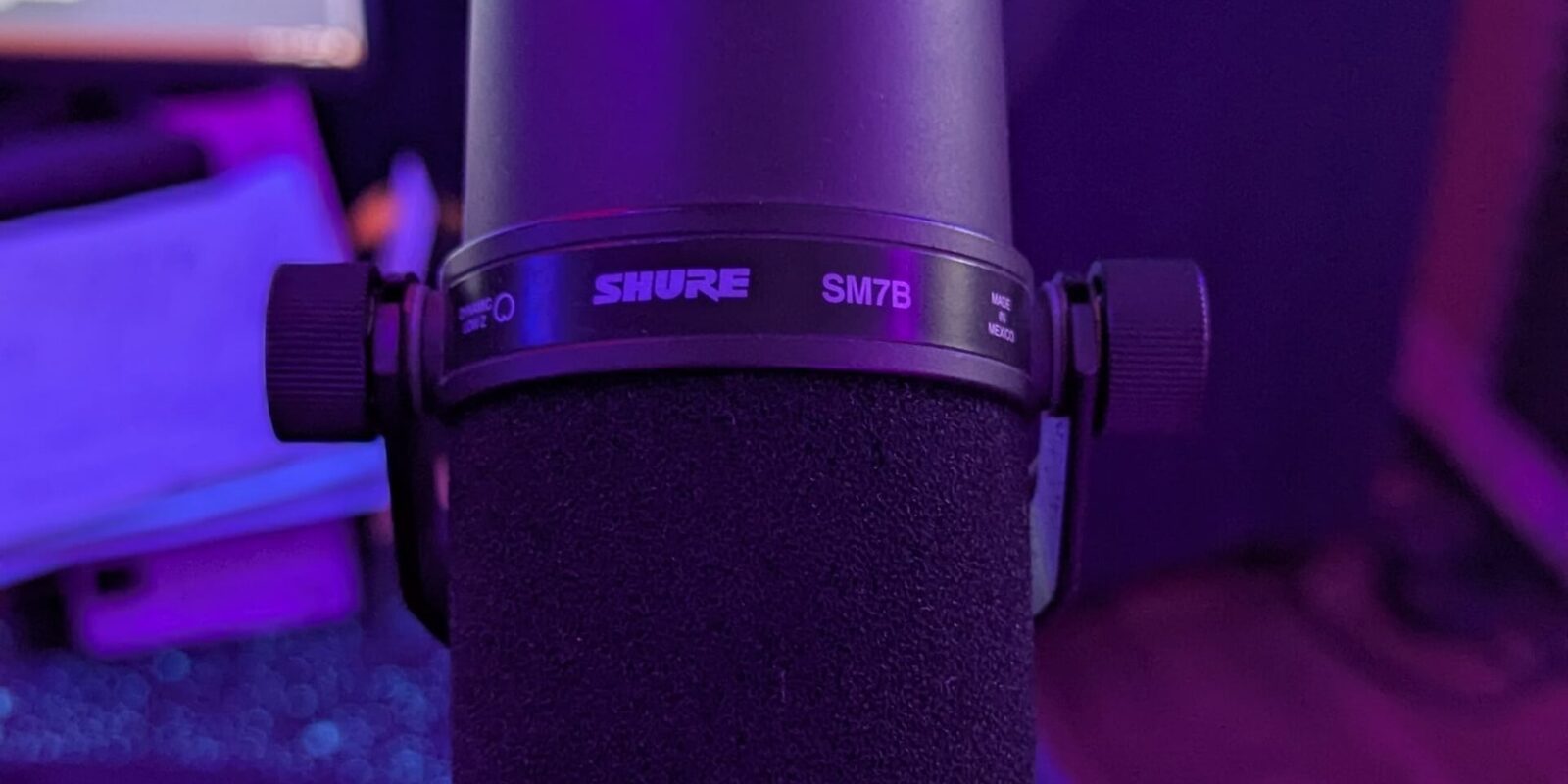
| Main microphone | Shure SM7B — the broadcast standard. Takes a loud voice in a live room without turning harsh and rejects most of what is behind it |
| Alternatives | Condensers available if a particular voice suits one better |
| Per person | Their own mic on a stand or boom, plus headphones |
| Capture | Separate track per voice, via SSL 2+ or Audient EVO 16 into Pro Tools |
| Room | Acoustically treated |
| Hours | 12 PM to 2 AM, closed Wednesdays |
| Where | 23 Alexis Blvd, North York, Toronto |
Headphones for everyone matter more than they sound: without them people talk over each other constantly, because they cannot hear how they sit against the other voices.
How a session runs
- Tell us how many voices. The number in the room decides the mic setup — put it in the booking notes and the room is laid out for it before you arrive.
- Everyone gets a mic and headphones. Levels set per person, not per table.
- Record. Every voice to its own track, with an engineer watching the levels so you can concentrate on the conversation.
- Post-production if you want it. Editing, noise cleanup and levelling so episodes sound the same week to week — or take the raw multitrack and cut it yourself. It is your recording either way.
What it costs
Studio time runs $55–$70/hr depending on how many hours you book, engineer included, one hour minimum:
| Booking | Rate |
|---|---|
| Under 4 hours | $70/hr |
| 4+ hours | $65/hr |
| 15+ hours | $60/hr |
| 30+ hours | $55/hr |
Editing and post-production are billed at that same hourly rate. Tell us what the show needs and you get an estimate of the hours first — a lightly trimmed interview and a heavily produced narrative episode are not the same amount of work, and pricing them the same would be dishonest in one direction or the other.
If you publish weekly, book in bulk. The tiers are the cheapest way to run a season: prepay the hours and use them across as many episodes as you like. A show recording two hours a week hits the 15-hour tier inside two months.
A 25% deposit holds the slot, minimum $30, with the balance due at the session. Pay in full at least 24 hours ahead and you get 10% off.
Studio or home setup?
Honestly: if your show is one host talking alone into a decent mic in a carpeted room with soft furniture, you may not need a studio. That setup can sound fine.
Book a room when:
- There are two or more people in the conversation. Multi-mic setups are where home recording falls apart — bleed, mismatched levels, one merged file.
- You have a guest worth sounding good for. You get one shot at a guest who cleared an hour for you.
- The space you have is hard-surfaced. A glass table and drywall will beat any microphone you buy.
- You do not want to spend your week editing. Getting it right at the source is much faster than repairing it afterwards.
Before you book the guests
Ask for a walkthrough first — most hosts want to see the room before they commit a guest to a date, and that is a completely reasonable thing to ask of any studio.
Two other things worth sorting in advance: how many voices will be in the room, so the setup is confirmed rather than assumed, and whether any guest is remote, because a remote guest needs a different setup from everyone-in-the-room and that is a conversation to have before the date rather than on the day.
Frequently asked questions
What makes a podcast sound professional? A treated room, a level set individually per voice, and every voice recorded to its own track. The microphone matters far less than those three — a great mic in a hard-surfaced room still sounds like a conference call.
How much does it cost to record a podcast in Toronto? At The BASEment, studio time runs $55–$70/hr depending on hours booked, with an engineer included and a one-hour minimum. Editing and post-production are billed at the same hourly rate with an estimate of the hours given up front.
Why should each voice be on a separate track? Because it is the difference between fixing a problem and losing the take. With separate tracks you can level one speaker, cut a cough or remove a phone buzz without touching anyone else. A single merged file welds every mistake to every good line.
Do I need a studio or can I record a podcast at home? A single host in a carpeted room with soft furniture can sound fine at home. Book a room once there are two or more people, when the space is hard-surfaced, or when you have a guest you only get one shot at.
How many people can you record at once? Tell us your number when you book and we will confirm the setup for it. The mic and interface count sets the ceiling, so it is worth asking rather than assuming.
Can you record remote guests? Ask when you book. A remote guest needs a different setup from everyone-in-the-room, so it is best sorted out before the date rather than on the day.
Do you edit the episode too? If you want. Editing, cleanup and levelling are billed hourly with an estimate up front, and every hour you book also includes up to 10 minutes of editing afterwards. Plenty of hosts just take the raw multitrack and cut it themselves.